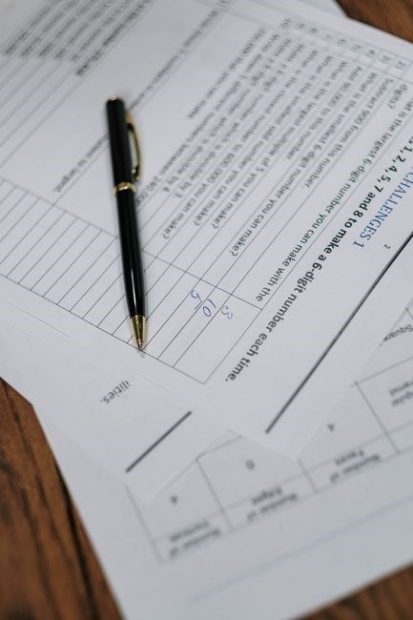
Discover how A Star Equivalency offers free PDF past papers for GCSE maths, giving students realistic practice and full mark schemes. Signing up unlocks authentic exam style, enabling focused revision and confidence before the test. These PDFs mirror the exam format, helping you gauge difficulty and improve time!!

Why Past Papers Are Essential for Success
Past papers are the cornerstone of GCSE maths equivalency preparation. They provide a realistic snapshot of the exact style, difficulty and pacing you will face on exam day. By repeatedly working through authentic PDFs, you internalise the way questions are phrased, the sequence of topics, and the subtle nuances that can trip up even the most confident students. This repeated exposure builds muscle memory, allowing you to recognise patterns instantly and allocate your time more effectively. Moreover, past papers expose you to a wide range of problem‑solving scenarios, from straightforward calculations to multi‑step proofs, ensuring you are not caught off‑guard by unexpected twists. Each completed paper becomes a diagnostic tool: you can track which areas consistently give you trouble, adjust your revision plan accordingly, and monitor progress over time. The psychological benefit is equally significant. Knowing that you have already tackled a similar paper, turning the exam into a familiar challenge rather than an unknown threat; Finally, practising under timed conditions mirrors the pressure of the actual test, teaching you how to prioritise questions, manage stress, and finish within the allotted window. In short, past papers are the bridge between theory and performance, turning abstract concepts into tangible skills that translate directly into marks. With consistent practice, you will develop a rhythm that turns complex calculations into second‑guessing free responses, ensuring that every question is tackled with confidence and precision. and you’ll ace every test.!

Sources for Free PDF Past Papers
A Star Equivalency offers free PDF past papers for GCSE maths. Sign up to their online course to access full papers, mark schemes, and revision notes. These PDFs mirror real exam style, giving realistic practice and boosting confidence. Additionally, free repositories host past papers from various exam boards, covering all syllabus topics. Download and print these PDFs to practice offline, marking your answers and comparing to mark schemes for precise feedback and review.
A Star Equivalency Past Papers PDF
A Star Equivalency offers free PDF past papers for GCSE maths, mirroring official exam structure. After signing up, students receive full papers, detailed mark schemes, and revision notes. PDFs cover core and extension questions, updated to match syllabus changes. Learners can download, print, or view online, using the clear layout for timed practice. Self‑grading with mark schemes helps spot errors and track improvement. The platform also provides sample solutions, guiding students through complex problems. PDFs are formatted for easy navigation, encouraging active engagement and exam‑day strategy development. This resource is ideal for equivalency candidates, aligning with exam board criteria and offering realistic practice. Free access removes cost barriers, making quality materials available to all. Incorporating these PDFs into a study plan lets students systematically review topics, practice under time pressure, and boost confidence for the exam day.
Students can also download the PDFs in high‑resolution format, ensuring clarity for complex diagrams and equations. The platform’s mobile‑friendly interface allows practice on the go, with interactive features such as clickable answer boxes for instant feedback. Teachers and tutors can use the mark scheme PDFs to create targeted revision sessions, focusing on common error patterns. The resource’s community forums provide peer support, where learners share tips, clarify doubts, and celebrate milestones. By engaging with these additional tools, candidates build resilience, refine strategies, and enter the exam with confidence
Other Free Resources and Platforms
Beyond dedicated equivalency sites, a wealth of free materials can sharpen GCSE maths skills. Official exam board portals—such as Edexcel, AQA, OCR, and WJEC—host archived papers and mark schemes. These PDFs are downloadable at no cost and reflect the exact format of past exams. National education sites like BBC Bitesize offer interactive lessons, problem sets, and video explanations that align with the syllabus, helping students grasp concepts before tackling full papers. Online learning platforms such as Khan Academy provide structured courses, timed quizzes, and instant feedback, allowing learners to practice under exam conditions. Free revision tools on CGP’s website supply downloadable worksheets, answer keys, and printable practice tests. Community forums, notably The Student Room, host user‑generated past papers and discussion threads where candidates share strategies and clarify doubts. YouTube channels dedicated to GCSE maths—e.g., Maths Genie, MathsHelp, and Mr. S’s Maths—deliver step‑by‑step tutorials and mock exam walkthroughs. Mobile apps like Maths Practice and GCSE Maths Prep offer bite‑size drills and flashcards that are ideal for on‑the‑go revision. Finally, open‑access repositories such as OpenStax and the National Curriculum Resources Library provide supplementary textbooks and problem sets that complement exam practice. By weaving these free resources into a structured study plan, students can diversify their exposure, reinforce weak areas, and simulate real‑exam pressure without incurring costs —done.
Exam Structure and Question Types
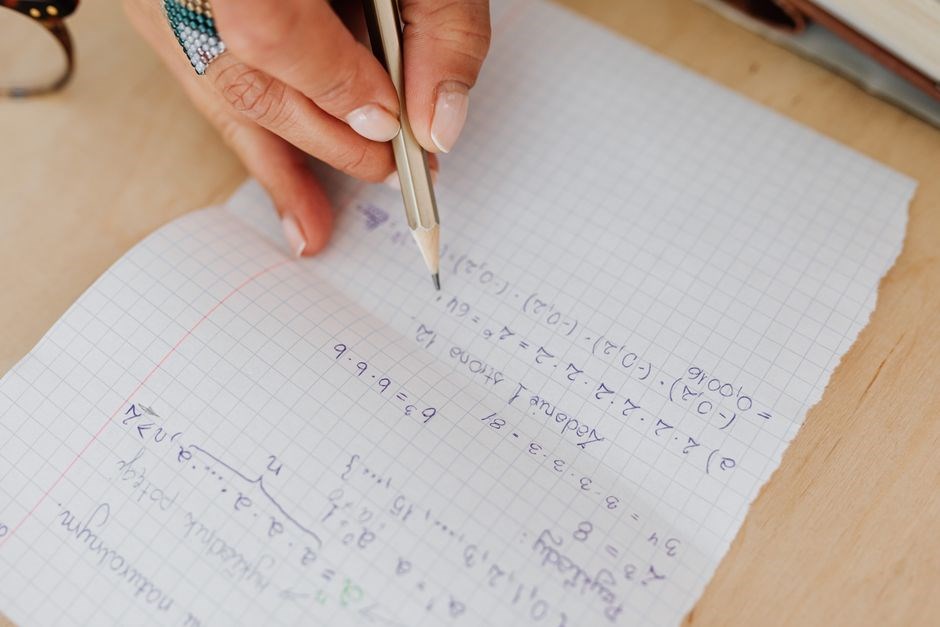
The GCSE maths equivalency test mirrors the standard exam, featuring multiple‑choice, short answer, and extended problem‑solving questions. Core papers cover algebra, geometry, and statistics; extension papers add advanced topics like calculus and probability. Candidates should practice timing, mark schemes now.
Core Sections Covered in Past Papers

GCSE maths equivalency past papers focus on the core curriculum, ensuring candidates encounter the same breadth and depth as the official exam. The core sections include:
- Number – Operations, fractions, decimals, percentages, ratios, and proportions. Papers test mental calculation, reasoning, and conversion skills, often requiring quick, accurate responses to time‑pressured questions.
- Algebra – Expressions, equations, inequalities, factorisation, and linear relationships. Questions require simplification, substitution, solving for unknowns, and manipulating algebraic forms to reach concise solutions.
- Geometry and Measures – Properties of shapes, angles, area, volume, and coordinate geometry. Tasks involve diagram interpretation, proof, calculation, and applying theorems such as Pythagoras, similarity, and trigonometry.
- Statistics – Data handling, interpretation of charts, mean, median, mode, range, and probability. Candidates must analyse data sets, construct frequency tables, and draw logical conclusions from statistical information.
- Ratios and Proportions – Scaling, unit rates, and real‑world applications. Problems often combine multiple concepts, requiring the application of proportional reasoning to solve practical problems.
Each PDF includes full mark schemes, allowing students to benchmark accuracy and identify gaps. By repeatedly practising these core sections, learners build confidence, refine techniques, and align with the exam’s expectations. The structured practice also helps in recognising common patterns, reducing anxiety, and improving overall performance during the actual assessment.

Extension Sections Covered in Past Papers
Extension papers broaden the scope beyond core topics, challenging candidates with advanced concepts that mirror the higher difficulty of the equivalency exam. These sections probe deeper understanding and application skills, encouraging analytical thinking and precision.

- Advanced Algebra – Quadratic equations, simultaneous equations, and polynomial identities. Candidates must factor, expand, and solve complex expressions, often integrating multiple steps within a single problem.
- Advanced Geometry – Transformations, three‑dimensional geometry, and trigonometric identities. Tasks involve proving properties, calculating volumes of irregular solids, and applying trigonometric ratios to solve real‑world scenarios.
- Data Handling & Probability – Advanced statistical analysis, probability distributions, and combinatorics. Questions require constructing probability trees, calculating expected values, and interpreting statistical data with higher precision.
- Number Theory & Advanced Calculations – Prime factorisation, greatest common divisors, and complex number operations. Problems test the ability to manipulate large numbers, apply modular arithmetic, and solve equations involving irrational numbers.
- Problem‑Solving & Reasoning – Multi‑step problems that combine several mathematical strands. Candidates must identify relevant concepts, devise strategies, and execute solutions with clarity and accuracy.
Each extension PDF includes detailed mark schemes, allowing learners to assess their reasoning, check calculation steps, and refine their approach. Regular practice with these sections builds confidence, enhances problem‑solving speed, and aligns candidates with the expectations of the equivalency assessment, ensuring they are well‑prepared for the most demanding questions.
Practising these extension papers also cultivates a deeper appreciation for mathematical elegance and encourages independent exploration beyond the syllabus. By tackling intricate problems, students develop resilience, adaptability, and a habit of meticulous checking, all of which are invaluable during the final assessment.
Moreover, the extension PDFs often incorporate real‑world contexts, such as financial calculations, engineering scenarios, and scientific data interpretation. This contextualisation helps students see the relevance of mathematics in everyday life, motivating them to engage more fully with the material and to apply learned concepts creatively.
Finally, consistent exposure to extension content fosters a growth mindset, encouraging learners to view challenges as opportunities to expand their skill set rather than obstacles. This positive attitude, coupled with rigorous practice, positions candidates to excel in both core and extension questions during the equivalency exam.

Effective Study Techniques with Past Papers
Use timed practice, review mark schemes, focus on weak areas, repeat mistakes, and simulate exam conditions. A Star PDFs offer full solutions, enabling self‑assessment and targeted revision. Practice with PDFs, track progress, and adjust focus areas accordingly.!!
Timed Practice Sessions Using PDFs
Begin by selecting a full GCSE maths equivalency past paper PDF from the A Star repository. Allocate a strict time limit that mirrors the official exam duration—typically 1 hour and 30 minutes for the core section and an additional 30 minutes for extensions. Create a quiet workspace, set a timer, and treat the session as a real test: no interruptions, no aids, and strict adherence to the time constraints.
During the session, read each question carefully, estimate the time needed, and move on if you’re stuck. After completing the paper, immediately check your answers against the provided full mark scheme. Note any mistakes, especially those that cost you multiple marks, and record the time taken for each section.

Repeat this cycle weekly, gradually reducing the time you spend on each question. Track your progress in a log: note the total marks, time per section, and common error patterns. This data helps you identify which topics need more focused revision and which pacing strategies work best.
Incorporate short breaks between timed sessions to prevent fatigue. Use the breaks to review key formulas, practice mental calculations, or simply rest your eyes. Consistent, disciplined practice with PDFs not only builds confidence but also ingrains the exam rhythm, ensuring you can tackle the real test with calm precision.
Mark Scheme Analysis for Error Identification
After completing a GCSE maths equivalency past paper PDF, the next critical step is a meticulous review of the full mark scheme. Begin by comparing each answer with the scheme, noting where marks were lost. Pay special attention to partial credit sections—many examiners award points for correct reasoning even if the final answer is slightly off. Record any patterns: are you consistently missing steps in algebraic manipulation, or losing marks for not showing work in geometry? Use a spreadsheet or a simple table to log each question, the marks awarded, the marks available, and a brief comment on the discrepancy. This systematic approach transforms a raw score into actionable insights. For example, if you lose marks for not simplifying an expression, the mark scheme will often show the intermediate steps that were expected. By reproducing those steps in your own notes, you reinforce the technique. Additionally, examine the examiner’s comments on common pitfalls; these are invaluable for spotting subtle errors you might overlook. Finally, set a revision priority list based on the frequency and severity of the mistakes identified. Target the high‑impact areas first, then move to the less frequent issues. Repeating this cycle after each practice paper ensures continuous improvement and a deeper understanding of the marking criteria. By systematically recording each discrepancy and reviewing the examiner’s rationale, you develop a nuanced understanding of the grading rubric, enabling you to anticipate the examiner’s expectations and refine your problem‑solving approach for accuracy carefully daily.

Common Mistakes and How to Avoid Them
Students often misread questions, rush calculations, or skip revision of core topics. Avoid by reading instructions twice, practicing timed sessions with PDFs, and reviewing mark schemes for common errors. Sign up for free A Star past papers to sharpen skills today.
Misinterpreting Question Instructions
Misinterpreting question instructions is a common pitfall that can cost you marks, especially when working with GCSE maths equivalency test past papers in PDF format. The A Star Equivalency platform offers a wealth of free past papers that mirror the real exam structure, but even the best resources can be undermined if you don’t read every word carefully. The common errors include overlooking qualifiers such as “exactly”, “at least”, or “no more than”, assuming that a calculation step is optional, or misreading the required units. For instance, a question might ask for a value “to two decimal places”, and a careless student might provide a rounded figure that falls outside the acceptable range. Another frequent mistake is neglecting to check the final answer against the mark scheme’s expected format, which can lead to a loss of partial credit. To avoid these issues, adopt a systematic approach: first, read the entire question once to get the big picture; then, underline or highlight key terms and constraints; next, write down any assumptions you need to confirm; finally, double‑check your answer against the mark scheme before submitting. By practicing with the free PDF past papers and reviewing the detailed mark schemes that A Star provides, you’ll train yourself to spot subtle wording differences and to apply the correct procedures consistently. This disciplined method not only improves accuracy but also builds confidence, allowing you to focus on solving problems rather than second‑guessing the wording of the question.
Underestimating Time Management in Exam Conditions
Many candidates underestimate the importance of pacing during the GCSE maths equivalency test, especially when working through the free PDF past papers supplied by A Star Equivalency. The exam is divided into distinct sections, each with a prescribed time limit; failing to allocate time appropriately can lead to rushed calculations or incomplete answers. A proven strategy is to first skim the entire paper, noting the number of questions in each section and the total time available. Then, set a target time per question, adding a buffer for the most challenging items. While practising with the PDF past papers, use a stopwatch or a timer app to simulate real exam conditions; this helps you internalise the rhythm of the test and identify where you tend to spend too much time. Additionally, mark the most difficult questions and decide whether to tackle them first or leave them for later, depending on your confidence level. After each timed session, review your pacing: did you finish early, or did you run out of time? Adjust your strategy accordingly. Consistent timed practice not only sharpens calculation speed but also builds mental stamina, ensuring that you can maintain focus throughout the entire paper. Incorporating mental breaks every 15 minutes during timed practice helps prevent fatigue, keeping concentration sharp and ensuring consistent accuracy throughout the test. By treating the PDF papers as a realistic rehearsal, you’ll develop a reliable time‑management plan that reduces exam anxiety and maximises your score.
Skipping Revision of Core Topics
In the rush to tackle the free PDF past papers for the GCSE maths equivalency test, many students fall into the trap of bypassing a thorough review of the core curriculum. Skipping revision of foundational topics such as algebraic manipulation, geometry, number theory, and data handling can leave gaps that become apparent when faced with unfamiliar question formats. The A Star Equivalency PDF papers are designed to mirror the real exam’s structure, so missing a key concept can translate into unanswered questions or incorrect calculations. A disciplined approach involves first mapping out the core syllabus and then allocating dedicated study blocks for each area. Even a short, focused revision session—say, 20 minutes per topic—can reinforce memory and clarify doubts. When working through the past papers, pause after each section to identify any recurring themes or mistakes that stem from weak fundamentals. Use the accompanying mark schemes to trace the logic behind each solution, noting where a solid grasp of core principles would have simplified the process. Additionally, integrating flashcards, quick quizzes, or peer discussion can reinforce learning without consuming excessive time. By ensuring that core topics are revisited regularly, students can approach the PDF papers with confidence, reducing the risk of being blindsided by seemingly straightforward questions that actually test deep understanding. Consistent revision also builds a mental framework that supports efficient problem‑solving during timed practice sessions, ultimately improving overall performance on the equivalency test.